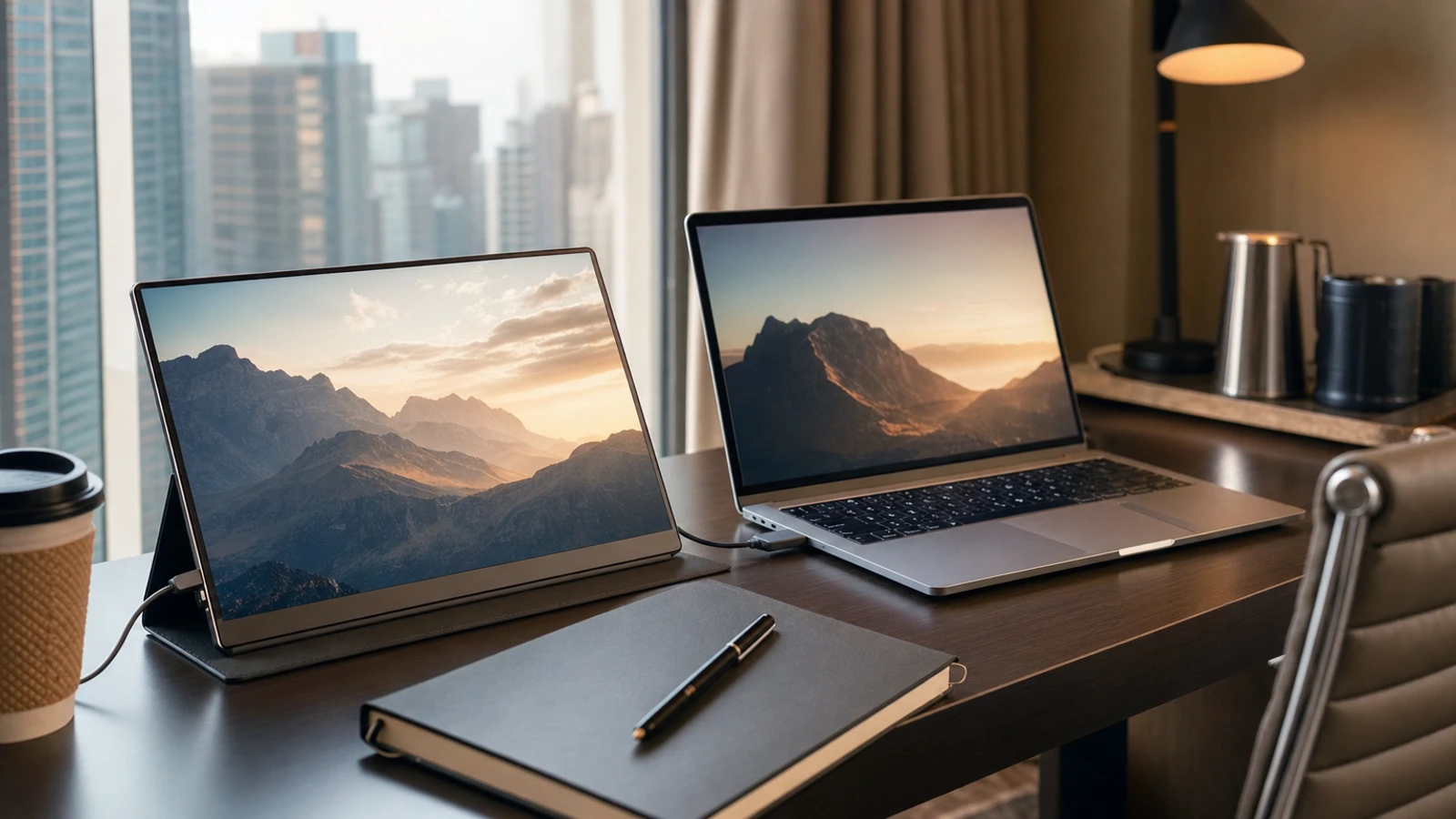
This support page focuses on brightness, glare, and hotel-room lighting problems for portable monitors. The main shortlist covers products; this page keeps the setup decisions practical.
Brightness, Glare, and Hotel-Room Lighting Problems
Brightness numbers need context. A brighter panel helps near windows or in unpredictable rooms, but glossy glass can still reflect lamps and faces. Compare brightness, finish, and viewing angle together rather than chasing one number.
Matte is usually calmer for work. Matte screens can look less dramatic than glossy displays, yet they often feel easier during long document sessions. If the monitor is for productivity rather than movies, glare control may matter more than punchy contrast.
Hotel desks create odd light. Travel work happens under wall sconces, desk lamps, daylight gaps, and overhead lighting. A screen that tilts easily and stays stable helps dodge reflections without rebuilding the whole desk.
Brightness affects battery. Running a portable monitor at maximum brightness can drain a laptop quickly. If outlet access is uncertain, check whether the screen remains readable at moderate settings.
Eye comfort is a feature. Flicker behavior, blue-light settings, text clarity, and adjustable brightness all influence whether the second screen feels like help or strain after two hours.
Travel decision notes
Travel scenario 1: Brightness numbers need context. Revisit this point by picturing a real mobile-work day: unpacking on a narrow desk, finding power, joining a call, reading small text, moving rooms, and repacking before dinner. Because a brighter panel helps near windows or in unpredictable rooms, but glossy glass can still reflect lamps and faces. compare brightness, finish, and viewing angle together rather than chasing one number. the right portable monitor should make the setup calmer, not add another troubleshooting ritual.
Inspection cue 1. For brightness, glare, and hotel-room lighting problems, study product photos and owner notes for cable exits, stand angle, panel flex, case protection, brightness controls, and whether the screen remains useful beside the actual laptop. A spec sheet only helps when it matches the working surface, bag space, and adapter kit.
Decision filter 1. Keep the choice tied to the traveler’s normal workload: spreadsheets, writing, dashboards, coding, presentations, client calls, tablet use, or family road trips. If the monitor solves that repeated job without crowding the bag, it becomes a productivity tool rather than a novelty accessory.
Pack-and-use check 1. Before relying on this feature, put the monitor, laptop, charger, cable, adapter, sleeve, and stand into the same bag that will travel. Then set it up on a small table and time the process. If brightness, glare, and hotel-room lighting problems creates confusion at home, it will create more pressure in a hotel room, airport lounge, classroom, or client office.
Travel scenario 2: Matte is usually calmer for work. Revisit this point by picturing a real mobile-work day: unpacking on a narrow desk, finding power, joining a call, reading small text, moving rooms, and repacking before dinner. Because matte screens can look less dramatic than glossy displays, yet they often feel easier during long document sessions. if the monitor is for productivity rather than movies, glare control may matter more than punchy contrast. the right portable monitor should make the setup calmer, not add another troubleshooting ritual.
Inspection cue 2. For brightness, glare, and hotel-room lighting problems, study product photos and owner notes for cable exits, stand angle, panel flex, case protection, brightness controls, and whether the screen remains useful beside the actual laptop. A spec sheet only helps when it matches the working surface, bag space, and adapter kit.
Decision filter 2. Keep the choice tied to the traveler’s normal workload: spreadsheets, writing, dashboards, coding, presentations, client calls, tablet use, or family road trips. If the monitor solves that repeated job without crowding the bag, it becomes a productivity tool rather than a novelty accessory.
Pack-and-use check 2. Before relying on this feature, put the monitor, laptop, charger, cable, adapter, sleeve, and stand into the same bag that will travel. Then set it up on a small table and time the process. If brightness, glare, and hotel-room lighting problems creates confusion at home, it will create more pressure in a hotel room, airport lounge, classroom, or client office.
Travel scenario 3: Hotel desks create odd light. Revisit this point by picturing a real mobile-work day: unpacking on a narrow desk, finding power, joining a call, reading small text, moving rooms, and repacking before dinner. Because travel work happens under wall sconces, desk lamps, daylight gaps, and overhead lighting. a screen that tilts easily and stays stable helps dodge reflections without rebuilding the whole desk. the right portable monitor should make the setup calmer, not add another troubleshooting ritual.
Inspection cue 3. For brightness, glare, and hotel-room lighting problems, study product photos and owner notes for cable exits, stand angle, panel flex, case protection, brightness controls, and whether the screen remains useful beside the actual laptop. A spec sheet only helps when it matches the working surface, bag space, and adapter kit.
Decision filter 3. Keep the choice tied to the traveler’s normal workload: spreadsheets, writing, dashboards, coding, presentations, client calls, tablet use, or family road trips. If the monitor solves that repeated job without crowding the bag, it becomes a productivity tool rather than a novelty accessory.
Pack-and-use check 3. Before relying on this feature, put the monitor, laptop, charger, cable, adapter, sleeve, and stand into the same bag that will travel. Then set it up on a small table and time the process. If brightness, glare, and hotel-room lighting problems creates confusion at home, it will create more pressure in a hotel room, airport lounge, classroom, or client office.
Travel scenario 4: Brightness affects battery. Revisit this point by picturing a real mobile-work day: unpacking on a narrow desk, finding power, joining a call, reading small text, moving rooms, and repacking before dinner. Because running a portable monitor at maximum brightness can drain a laptop quickly. if outlet access is uncertain, check whether the screen remains readable at moderate settings. the right portable monitor should make the setup calmer, not add another troubleshooting ritual.
Inspection cue 4. For brightness, glare, and hotel-room lighting problems, study product photos and owner notes for cable exits, stand angle, panel flex, case protection, brightness controls, and whether the screen remains useful beside the actual laptop. A spec sheet only helps when it matches the working surface, bag space, and adapter kit.
Decision filter 4. Keep the choice tied to the traveler’s normal workload: spreadsheets, writing, dashboards, coding, presentations, client calls, tablet use, or family road trips. If the monitor solves that repeated job without crowding the bag, it becomes a productivity tool rather than a novelty accessory.
Pack-and-use check 4. Before relying on this feature, put the monitor, laptop, charger, cable, adapter, sleeve, and stand into the same bag that will travel. Then set it up on a small table and time the process. If brightness, glare, and hotel-room lighting problems creates confusion at home, it will create more pressure in a hotel room, airport lounge, classroom, or client office.
Travel scenario 5: Eye comfort is a feature. Revisit this point by picturing a real mobile-work day: unpacking on a narrow desk, finding power, joining a call, reading small text, moving rooms, and repacking before dinner. Because flicker behavior, blue-light settings, text clarity, and adjustable brightness all influence whether the second screen feels like help or strain after two hours. the right portable monitor should make the setup calmer, not add another troubleshooting ritual.
Inspection cue 5. For brightness, glare, and hotel-room lighting problems, study product photos and owner notes for cable exits, stand angle, panel flex, case protection, brightness controls, and whether the screen remains useful beside the actual laptop. A spec sheet only helps when it matches the working surface, bag space, and adapter kit.
Decision filter 5. Keep the choice tied to the traveler’s normal workload: spreadsheets, writing, dashboards, coding, presentations, client calls, tablet use, or family road trips. If the monitor solves that repeated job without crowding the bag, it becomes a productivity tool rather than a novelty accessory.
Pack-and-use check 5. Before relying on this feature, put the monitor, laptop, charger, cable, adapter, sleeve, and stand into the same bag that will travel. Then set it up on a small table and time the process. If brightness, glare, and hotel-room lighting problems creates confusion at home, it will create more pressure in a hotel room, airport lounge, classroom, or client office.
Use the hub and related support pages to compare second-screen details before adding a portable monitor to the travel kit.