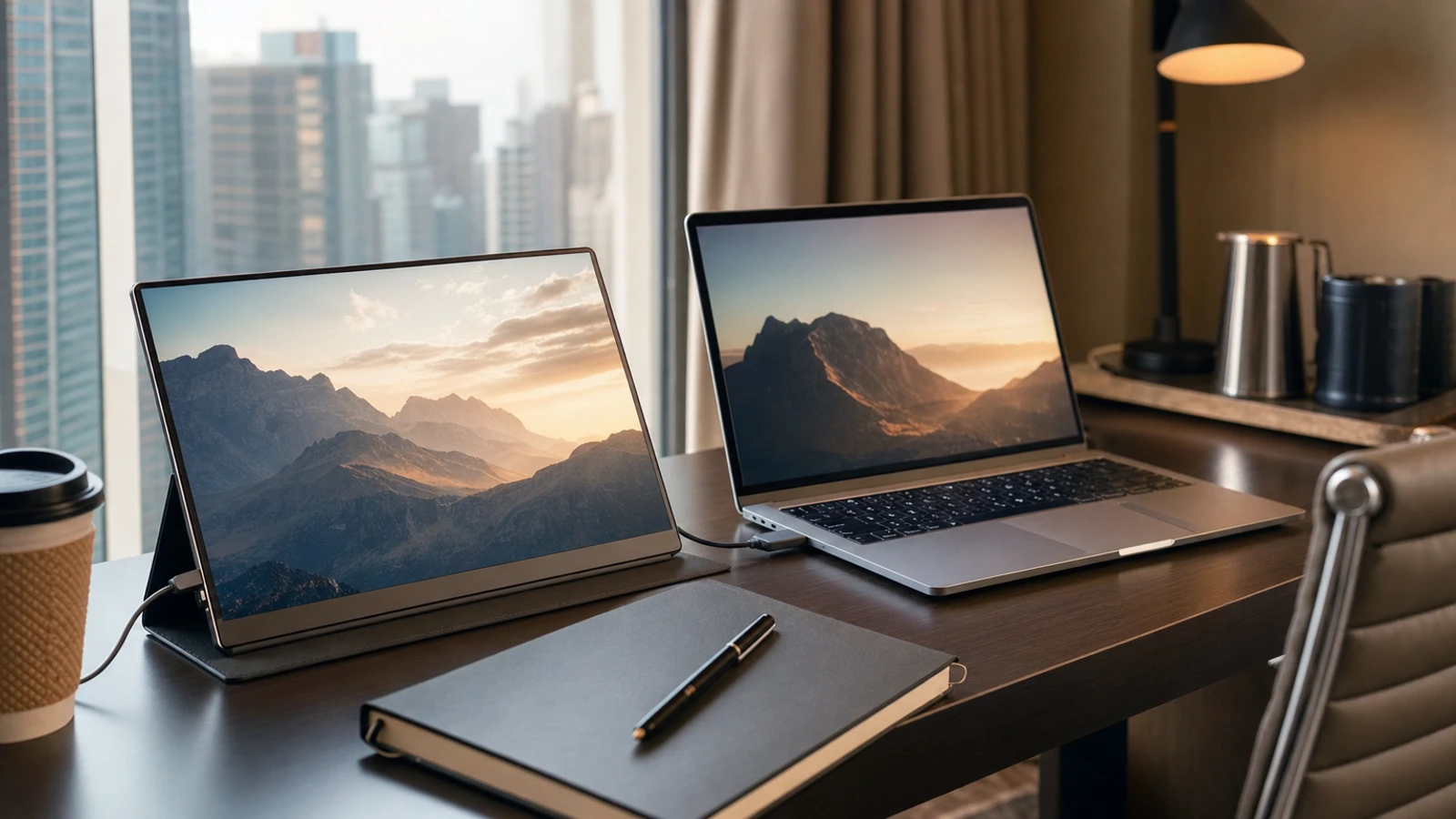
This support page focuses on screen size, resolution, and scaling for travel work for portable monitors. The main shortlist covers products; this page keeps the setup decisions practical.
Screen Size, Resolution, and Scaling for Travel Work
Size changes posture. A 14-inch display packs easily, while 15.6 or 16 inches can feel closer to a true second screen. Bigger is not always better if the monitor forces a cramped café table or awkward backpack fit.
Resolution should match eyesight. Full HD is often practical for spreadsheets, email, dashboards, and writing. Higher resolution can look sharper, but scaling may make menus tiny or reduce usable space if the laptop and portable monitor do not match well.
Aspect ratio affects tasks. Standard 16:9 works for presentations and video, while taller ratios can help documents and coding. Think about the work that actually travels: slide review, client dashboards, writing, editing, remote support, or school assignments.
Color accuracy depends on the job. Designers need better color coverage and calibration than someone reading notes beside a laptop. Do not pay for panel specs that do not improve the travel workflow, but do avoid washed-out screens that make long sessions tiring.
Desk distance is real. Portable screens often sit closer than office monitors. Choose a size and resolution that feel comfortable at arm’s length on a tray table, hotel desk, or coworking bench.
Travel decision notes
Travel scenario 1: Size changes posture. Revisit this point by picturing a real mobile-work day: unpacking on a narrow desk, finding power, joining a call, reading small text, moving rooms, and repacking before dinner. Because a 14-inch display packs easily, while 15.6 or 16 inches can feel closer to a true second screen. bigger is not always better if the monitor forces a cramped café table or awkward backpack fit. the right portable monitor should make the setup calmer, not add another troubleshooting ritual.
Inspection cue 1. For screen size, resolution, and scaling for travel work, study product photos and owner notes for cable exits, stand angle, panel flex, case protection, brightness controls, and whether the screen remains useful beside the actual laptop. A spec sheet only helps when it matches the working surface, bag space, and adapter kit.
Decision filter 1. Keep the choice tied to the traveler’s normal workload: spreadsheets, writing, dashboards, coding, presentations, client calls, tablet use, or family road trips. If the monitor solves that repeated job without crowding the bag, it becomes a productivity tool rather than a novelty accessory.
Pack-and-use check 1. Before relying on this feature, put the monitor, laptop, charger, cable, adapter, sleeve, and stand into the same bag that will travel. Then set it up on a small table and time the process. If screen size, resolution, and scaling for travel work creates confusion at home, it will create more pressure in a hotel room, airport lounge, classroom, or client office.
Travel scenario 2: Resolution should match eyesight. Revisit this point by picturing a real mobile-work day: unpacking on a narrow desk, finding power, joining a call, reading small text, moving rooms, and repacking before dinner. Because full hd is often practical for spreadsheets, email, dashboards, and writing. higher resolution can look sharper, but scaling may make menus tiny or reduce usable space if the laptop and portable monitor do not match well. the right portable monitor should make the setup calmer, not add another troubleshooting ritual.
Inspection cue 2. For screen size, resolution, and scaling for travel work, study product photos and owner notes for cable exits, stand angle, panel flex, case protection, brightness controls, and whether the screen remains useful beside the actual laptop. A spec sheet only helps when it matches the working surface, bag space, and adapter kit.
Decision filter 2. Keep the choice tied to the traveler’s normal workload: spreadsheets, writing, dashboards, coding, presentations, client calls, tablet use, or family road trips. If the monitor solves that repeated job without crowding the bag, it becomes a productivity tool rather than a novelty accessory.
Pack-and-use check 2. Before relying on this feature, put the monitor, laptop, charger, cable, adapter, sleeve, and stand into the same bag that will travel. Then set it up on a small table and time the process. If screen size, resolution, and scaling for travel work creates confusion at home, it will create more pressure in a hotel room, airport lounge, classroom, or client office.
Travel scenario 3: Aspect ratio affects tasks. Revisit this point by picturing a real mobile-work day: unpacking on a narrow desk, finding power, joining a call, reading small text, moving rooms, and repacking before dinner. Because standard 16:9 works for presentations and video, while taller ratios can help documents and coding. think about the work that actually travels: slide review, client dashboards, writing, editing, remote support, or school assignments. the right portable monitor should make the setup calmer, not add another troubleshooting ritual.
Inspection cue 3. For screen size, resolution, and scaling for travel work, study product photos and owner notes for cable exits, stand angle, panel flex, case protection, brightness controls, and whether the screen remains useful beside the actual laptop. A spec sheet only helps when it matches the working surface, bag space, and adapter kit.
Decision filter 3. Keep the choice tied to the traveler’s normal workload: spreadsheets, writing, dashboards, coding, presentations, client calls, tablet use, or family road trips. If the monitor solves that repeated job without crowding the bag, it becomes a productivity tool rather than a novelty accessory.
Pack-and-use check 3. Before relying on this feature, put the monitor, laptop, charger, cable, adapter, sleeve, and stand into the same bag that will travel. Then set it up on a small table and time the process. If screen size, resolution, and scaling for travel work creates confusion at home, it will create more pressure in a hotel room, airport lounge, classroom, or client office.
Travel scenario 4: Color accuracy depends on the job. Revisit this point by picturing a real mobile-work day: unpacking on a narrow desk, finding power, joining a call, reading small text, moving rooms, and repacking before dinner. Because designers need better color coverage and calibration than someone reading notes beside a laptop. do not pay for panel specs that do not improve the travel workflow, but do avoid washed-out screens that make long sessions tiring. the right portable monitor should make the setup calmer, not add another troubleshooting ritual.
Inspection cue 4. For screen size, resolution, and scaling for travel work, study product photos and owner notes for cable exits, stand angle, panel flex, case protection, brightness controls, and whether the screen remains useful beside the actual laptop. A spec sheet only helps when it matches the working surface, bag space, and adapter kit.
Decision filter 4. Keep the choice tied to the traveler’s normal workload: spreadsheets, writing, dashboards, coding, presentations, client calls, tablet use, or family road trips. If the monitor solves that repeated job without crowding the bag, it becomes a productivity tool rather than a novelty accessory.
Pack-and-use check 4. Before relying on this feature, put the monitor, laptop, charger, cable, adapter, sleeve, and stand into the same bag that will travel. Then set it up on a small table and time the process. If screen size, resolution, and scaling for travel work creates confusion at home, it will create more pressure in a hotel room, airport lounge, classroom, or client office.
Travel scenario 5: Desk distance is real. Revisit this point by picturing a real mobile-work day: unpacking on a narrow desk, finding power, joining a call, reading small text, moving rooms, and repacking before dinner. Because portable screens often sit closer than office monitors. choose a size and resolution that feel comfortable at arm’s length on a tray table, hotel desk, or coworking bench. the right portable monitor should make the setup calmer, not add another troubleshooting ritual.
Inspection cue 5. For screen size, resolution, and scaling for travel work, study product photos and owner notes for cable exits, stand angle, panel flex, case protection, brightness controls, and whether the screen remains useful beside the actual laptop. A spec sheet only helps when it matches the working surface, bag space, and adapter kit.
Decision filter 5. Keep the choice tied to the traveler’s normal workload: spreadsheets, writing, dashboards, coding, presentations, client calls, tablet use, or family road trips. If the monitor solves that repeated job without crowding the bag, it becomes a productivity tool rather than a novelty accessory.
Pack-and-use check 5. Before relying on this feature, put the monitor, laptop, charger, cable, adapter, sleeve, and stand into the same bag that will travel. Then set it up on a small table and time the process. If screen size, resolution, and scaling for travel work creates confusion at home, it will create more pressure in a hotel room, airport lounge, classroom, or client office.
Use the hub and related support pages to compare second-screen details before adding a portable monitor to the travel kit.