This support page focuses on usb-c power and video: the one-cable reality check for portable monitors. The main shortlist covers products; this page keeps the setup decisions practical.
USB-C Power and Video: The One-Cable Reality Check
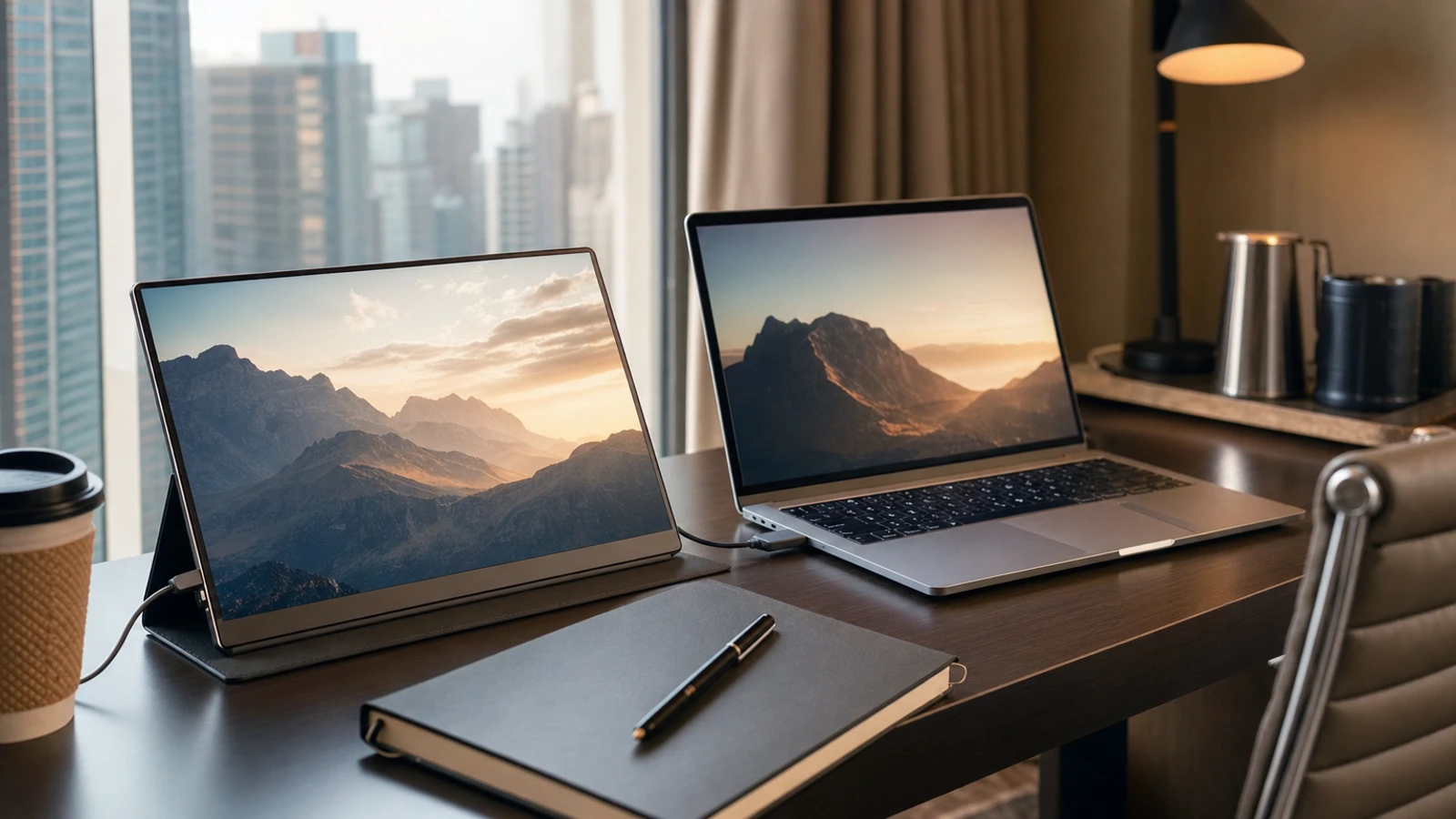
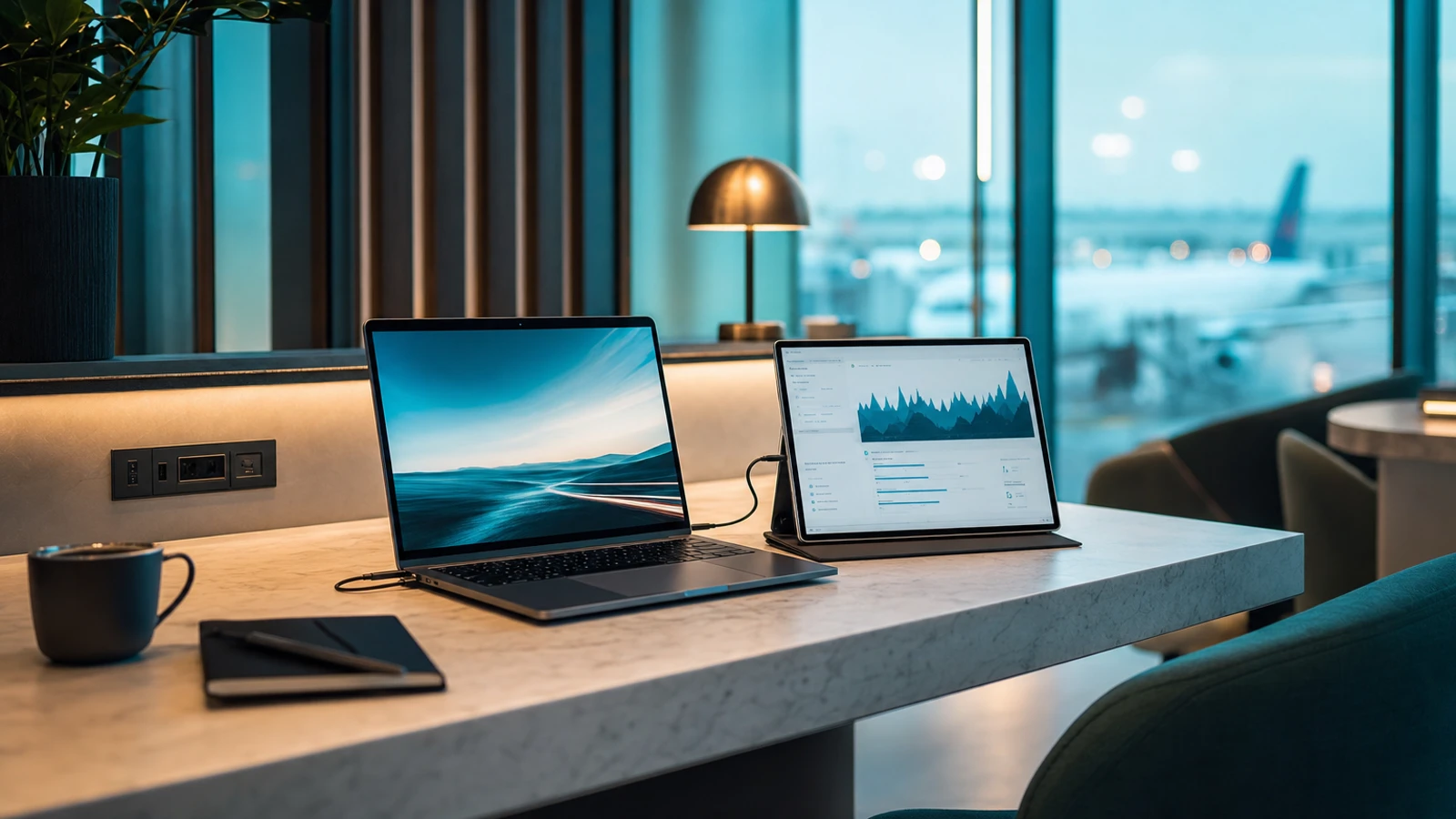
Confirm the port before the promise. A portable monitor may advertise USB-C, but the laptop port must support video output, not only charging or data. Look for DisplayPort Alt Mode, Thunderbolt, or clear manufacturer wording before assuming one cable will run everything.
Power draw changes the setup. Some portable monitors sip power from the laptop; others become dim, unstable, or hungry without a wall adapter. If travel days already strain battery life, check brightness levels and whether pass-through charging is available.
HDMI still matters. USB-C is convenient, but HDMI can rescue older laptops, mini PCs, game consoles, or meeting-room devices. A good travel display should make adapters predictable instead of forcing a last-minute cable scramble.
Cable quality is not optional. Thin mystery cables cause flicker, no-signal errors, or limited resolution. Keep the certified cable with the monitor and label it if the bag carries several similar cords.
Test at home first. Before taking a portable monitor on a trip, plug it into the real laptop, charger, hub, and power bank. One calm test prevents hotel-desk troubleshooting when the deadline is already close.
Travel decision notes
Travel scenario 1: Confirm the port before the promise. Revisit this point by picturing a real mobile-work day: unpacking on a narrow desk, finding power, joining a call, reading small text, moving rooms, and repacking before dinner. Because a portable monitor may advertise usb-c, but the laptop port must support video output, not only charging or data. look for displayport alt mode, thunderbolt, or clear manufacturer wording before assuming one cable will run everything. the right portable monitor should make the setup calmer, not add another troubleshooting ritual.
Inspection cue 1. For usb-c power and video: the one-cable reality check, study product photos and owner notes for cable exits, stand angle, panel flex, case protection, brightness controls, and whether the screen remains useful beside the actual laptop. A spec sheet only helps when it matches the working surface, bag space, and adapter kit.
Decision filter 1. Keep the choice tied to the traveler’s normal workload: spreadsheets, writing, dashboards, coding, presentations, client calls, tablet use, or family road trips. If the monitor solves that repeated job without crowding the bag, it becomes a productivity tool rather than a novelty accessory.
Pack-and-use check 1. Before relying on this feature, put the monitor, laptop, charger, cable, adapter, sleeve, and stand into the same bag that will travel. Then set it up on a small table and time the process. If usb-c power and video: the one-cable reality check creates confusion at home, it will create more pressure in a hotel room, airport lounge, classroom, or client office.
Travel scenario 2: Power draw changes the setup. Revisit this point by picturing a real mobile-work day: unpacking on a narrow desk, finding power, joining a call, reading small text, moving rooms, and repacking before dinner. Because some portable monitors sip power from the laptop; others become dim, unstable, or hungry without a wall adapter. if travel days already strain battery life, check brightness levels and whether pass-through charging is available. the right portable monitor should make the setup calmer, not add another troubleshooting ritual.
Inspection cue 2. For usb-c power and video: the one-cable reality check, study product photos and owner notes for cable exits, stand angle, panel flex, case protection, brightness controls, and whether the screen remains useful beside the actual laptop. A spec sheet only helps when it matches the working surface, bag space, and adapter kit.
Decision filter 2. Keep the choice tied to the traveler’s normal workload: spreadsheets, writing, dashboards, coding, presentations, client calls, tablet use, or family road trips. If the monitor solves that repeated job without crowding the bag, it becomes a productivity tool rather than a novelty accessory.
Pack-and-use check 2. Before relying on this feature, put the monitor, laptop, charger, cable, adapter, sleeve, and stand into the same bag that will travel. Then set it up on a small table and time the process. If usb-c power and video: the one-cable reality check creates confusion at home, it will create more pressure in a hotel room, airport lounge, classroom, or client office.
Travel scenario 3: HDMI still matters. Revisit this point by picturing a real mobile-work day: unpacking on a narrow desk, finding power, joining a call, reading small text, moving rooms, and repacking before dinner. Because usb-c is convenient, but hdmi can rescue older laptops, mini pcs, game consoles, or meeting-room devices. a good travel display should make adapters predictable instead of forcing a last-minute cable scramble. the right portable monitor should make the setup calmer, not add another troubleshooting ritual.
Inspection cue 3. For usb-c power and video: the one-cable reality check, study product photos and owner notes for cable exits, stand angle, panel flex, case protection, brightness controls, and whether the screen remains useful beside the actual laptop. A spec sheet only helps when it matches the working surface, bag space, and adapter kit.
Decision filter 3. Keep the choice tied to the traveler’s normal workload: spreadsheets, writing, dashboards, coding, presentations, client calls, tablet use, or family road trips. If the monitor solves that repeated job without crowding the bag, it becomes a productivity tool rather than a novelty accessory.
Pack-and-use check 3. Before relying on this feature, put the monitor, laptop, charger, cable, adapter, sleeve, and stand into the same bag that will travel. Then set it up on a small table and time the process. If usb-c power and video: the one-cable reality check creates confusion at home, it will create more pressure in a hotel room, airport lounge, classroom, or client office.
Travel scenario 4: Cable quality is not optional. Revisit this point by picturing a real mobile-work day: unpacking on a narrow desk, finding power, joining a call, reading small text, moving rooms, and repacking before dinner. Because thin mystery cables cause flicker, no-signal errors, or limited resolution. keep the certified cable with the monitor and label it if the bag carries several similar cords. the right portable monitor should make the setup calmer, not add another troubleshooting ritual.
Inspection cue 4. For usb-c power and video: the one-cable reality check, study product photos and owner notes for cable exits, stand angle, panel flex, case protection, brightness controls, and whether the screen remains useful beside the actual laptop. A spec sheet only helps when it matches the working surface, bag space, and adapter kit.
Decision filter 4. Keep the choice tied to the traveler’s normal workload: spreadsheets, writing, dashboards, coding, presentations, client calls, tablet use, or family road trips. If the monitor solves that repeated job without crowding the bag, it becomes a productivity tool rather than a novelty accessory.
Pack-and-use check 4. Before relying on this feature, put the monitor, laptop, charger, cable, adapter, sleeve, and stand into the same bag that will travel. Then set it up on a small table and time the process. If usb-c power and video: the one-cable reality check creates confusion at home, it will create more pressure in a hotel room, airport lounge, classroom, or client office.
Travel scenario 5: Test at home first. Revisit this point by picturing a real mobile-work day: unpacking on a narrow desk, finding power, joining a call, reading small text, moving rooms, and repacking before dinner. Because before taking a portable monitor on a trip, plug it into the real laptop, charger, hub, and power bank. one calm test prevents hotel-desk troubleshooting when the deadline is already close. the right portable monitor should make the setup calmer, not add another troubleshooting ritual.
Inspection cue 5. For usb-c power and video: the one-cable reality check, study product photos and owner notes for cable exits, stand angle, panel flex, case protection, brightness controls, and whether the screen remains useful beside the actual laptop. A spec sheet only helps when it matches the working surface, bag space, and adapter kit.
Decision filter 5. Keep the choice tied to the traveler’s normal workload: spreadsheets, writing, dashboards, coding, presentations, client calls, tablet use, or family road trips. If the monitor solves that repeated job without crowding the bag, it becomes a productivity tool rather than a novelty accessory.
Pack-and-use check 5. Before relying on this feature, put the monitor, laptop, charger, cable, adapter, sleeve, and stand into the same bag that will travel. Then set it up on a small table and time the process. If usb-c power and video: the one-cable reality check creates confusion at home, it will create more pressure in a hotel room, airport lounge, classroom, or client office.
Use the hub and related support pages to compare second-screen details before adding a portable monitor to the travel kit.